

Refrigerators are essential appliances in modern households and commercial settings, helping to preserve food and other perishables. At the heart of a refrigerator's cooling system lies the evaporator, a crucial component that plays a pivotal role in the refrigeration cycle. As a refrigerator evaporator supplier, I have witnessed firsthand the diversity of evaporator types available in the market. In this blog post, I will delve into the different types of refrigerator evaporators, their features, advantages, and applications.
1. Frost-Free Evaporators
Frost-free evaporators are a popular choice in modern refrigerators, especially in larger models and those designed for convenience. These evaporators are equipped with a defrosting mechanism that prevents the buildup of frost and ice on the evaporator coils. This is achieved through a combination of heating elements and a timer or sensor system.
How it works:
During normal operation, the refrigerant flows through the evaporator coils, absorbing heat from the refrigerator's interior and causing the refrigerant to evaporate. As the refrigerant evaporates, it cools the surrounding air, which is then circulated throughout the refrigerator by a fan. However, as the air cools, moisture in the air condenses on the evaporator coils and freezes, forming frost.
To prevent frost buildup, the defrosting cycle is initiated at regular intervals. The heating elements are activated, melting the frost on the evaporator coils. The melted frost then drains out of the refrigerator through a drain tube. Once the defrosting cycle is complete, the normal cooling cycle resumes.
Advantages:
- Convenience: Frost-free evaporators eliminate the need for manual defrosting, saving time and effort for the user.
- Consistent Cooling: By preventing frost buildup, frost-free evaporators ensure consistent cooling performance, maintaining a stable temperature inside the refrigerator.
- Energy Efficiency: Although the defrosting cycle consumes some energy, the overall energy efficiency of frost-free refrigerators is often higher than that of manual defrost models. This is because frost buildup can insulate the evaporator coils, reducing their efficiency and increasing energy consumption.
Applications:
Frost-free evaporators are commonly used in household refrigerators, freezers, and commercial refrigeration units. They are particularly suitable for applications where convenience and consistent cooling are important, such as in busy households or commercial kitchens.
2. Manual Defrost Evaporators
Manual defrost evaporators, also known as self-defrost or natural defrost evaporators, do not have a built-in defrosting mechanism. Instead, frost and ice buildup on the evaporator coils must be removed manually by the user.
How it works:
Similar to frost-free evaporators, the refrigerant flows through the evaporator coils, absorbing heat from the refrigerator's interior and causing the refrigerant to evaporate. As the refrigerant evaporates, it cools the surrounding air, which is then circulated throughout the refrigerator by a fan. However, without a defrosting mechanism, moisture in the air condenses on the evaporator coils and freezes, forming frost.
Over time, the frost buildup can reduce the efficiency of the evaporator and the overall cooling performance of the refrigerator. To remove the frost, the user must turn off the refrigerator, empty the contents, and let the frost melt naturally. This process can take several hours, depending on the amount of frost buildup.
Advantages:
- Lower Cost: Manual defrost evaporators are generally less expensive to manufacture than frost-free evaporators, making them a more affordable option for budget-conscious consumers.
- Energy Efficiency: Without the energy-consuming defrosting cycle, manual defrost refrigerators can be more energy-efficient than frost-free models, especially if the user defrosts the refrigerator regularly.
- Simple Design: Manual defrost evaporators have a simpler design and fewer components than frost-free evaporators, which can make them easier to maintain and repair.
Applications:
Manual defrost evaporators are commonly used in smaller refrigerators, freezers, and specialty refrigeration units. They are also a popular choice for applications where cost and energy efficiency are important, such as in dorm rooms, garages, or small businesses.
3. Plate Evaporators
Plate evaporators, also known as flat-plate evaporators, consist of a series of flat plates that are connected to a refrigerant circuit. The refrigerant flows through the plates, absorbing heat from the surrounding air and causing the refrigerant to evaporate.
How it works:
The plates of a plate evaporator are typically made of aluminum or copper, which are good conductors of heat. The refrigerant enters the evaporator through an inlet tube and flows through a series of channels or passages in the plates. As the refrigerant flows through the plates, it absorbs heat from the surrounding air, causing the refrigerant to evaporate. The evaporated refrigerant then exits the evaporator through an outlet tube and returns to the compressor.
Advantages:
- High Heat Transfer Efficiency: Plate evaporators have a large surface area, which allows for efficient heat transfer between the refrigerant and the surrounding air. This results in faster cooling and better energy efficiency.
- Compact Design: Plate evaporators have a compact design, which makes them suitable for applications where space is limited. They can be easily installed in small refrigerators, freezers, and other refrigeration units.
- Easy to Clean: The flat plates of a plate evaporator are easy to clean, which helps to maintain the efficiency of the evaporator and prevent the growth of bacteria and mold.
Applications:
Plate evaporators are commonly used in household refrigerators, freezers, and commercial refrigeration units. They are particularly suitable for applications where high heat transfer efficiency and a compact design are important, such as in small refrigerators, under-counter freezers, and display cases.

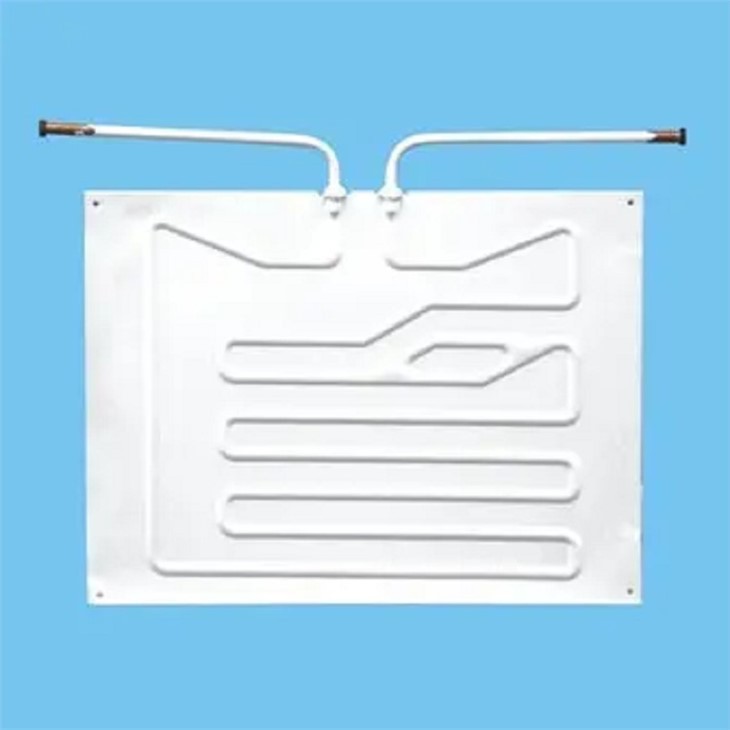
4. Tube-in-Sheet Evaporators
Tube-in-sheet evaporators, also known as finned-tube evaporators, consist of a series of tubes that are surrounded by a sheet of metal or plastic. The refrigerant flows through the tubes, absorbing heat from the surrounding air and causing the refrigerant to evaporate.
How it works:
The tubes of a tube-in-sheet evaporator are typically made of copper or aluminum, which are good conductors of heat. The tubes are surrounded by a sheet of metal or plastic, which acts as a fin to increase the surface area of the evaporator and improve heat transfer efficiency. The refrigerant enters the evaporator through an inlet tube and flows through the tubes, absorbing heat from the surrounding air, causing the refrigerant to evaporate. The evaporated refrigerant then exits the evaporator through an outlet tube and returns to the compressor.
Advantages:
- High Heat Transfer Efficiency: Tube-in-sheet evaporators have a large surface area, which allows for efficient heat transfer between the refrigerant and the surrounding air. This results in faster cooling and better energy efficiency.
- Durable Design: Tube-in-sheet evaporators are made of durable materials, such as copper and aluminum, which makes them resistant to corrosion and damage. They can withstand harsh operating conditions and have a long service life.
- Versatile Applications: Tube-in-sheet evaporators can be used in a wide range of refrigeration applications, including household refrigerators, freezers, commercial refrigeration units, and air conditioning systems.
Applications:
Tube-in-sheet evaporators are commonly used in household refrigerators, freezers, and commercial refrigeration units. They are particularly suitable for applications where high heat transfer efficiency, durability, and versatility are important, such as in large refrigerators, walk-in freezers, and industrial refrigeration systems.
5. Bonded Type Evaporator
Bonded type evaporators are a unique type of evaporator that combines the advantages of plate evaporators and tube-in-sheet evaporators. These evaporators consist of a series of tubes that are bonded to a flat plate, creating a single unit with a large surface area for efficient heat transfer.
How it works:
The tubes of a bonded type evaporator are typically made of copper or aluminum, which are good conductors of heat. The tubes are bonded to a flat plate, which acts as a fin to increase the surface area of the evaporator and improve heat transfer efficiency. The refrigerant enters the evaporator through an inlet tube and flows through the tubes, absorbing heat from the surrounding air, causing the refrigerant to evaporate. The evaporated refrigerant then exits the evaporator through an outlet tube and returns to the compressor.
Advantages:
- High Heat Transfer Efficiency: Bonded type evaporators have a large surface area, which allows for efficient heat transfer between the refrigerant and the surrounding air. This results in faster cooling and better energy efficiency.
- Compact Design: Bonded type evaporators have a compact design, which makes them suitable for applications where space is limited. They can be easily installed in small refrigerators, freezers, and other refrigeration units.
- Durable Design: Bonded type evaporators are made of durable materials, such as copper and aluminum, which makes them resistant to corrosion and damage. They can withstand harsh operating conditions and have a long service life.
Applications:
Bonded type evaporators are commonly used in household refrigerators, freezers, and commercial refrigeration units. They are particularly suitable for applications where high heat transfer efficiency, a compact design, and durability are important, such as in small refrigerators, under-counter freezers, and display cases.
Conclusion
In conclusion, there are several different types of refrigerator evaporators available in the market, each with its own unique features, advantages, and applications. As a Refrigerator Evaporator supplier, I understand the importance of choosing the right evaporator for your specific needs. Whether you are looking for a frost-free evaporator for convenience, a manual defrost evaporator for cost savings, or a high-efficiency evaporator for large-scale applications, we have the expertise and experience to provide you with the best solution.
If you are interested in learning more about our refrigerator evaporators or would like to discuss your specific requirements, please feel free to contact us. Our team of experts will be happy to assist you in selecting the right evaporator for your application and provide you with a competitive quote. We look forward to hearing from you and working with you to meet your refrigeration needs.
References
- ASHRAE Handbook - Refrigeration. American Society of Heating, Refrigerating and Air-Conditioning Engineers (ASHRAE).
- Refrigeration and Air Conditioning Technology. William C. Whitman, William M. Johnson, John Tomczyk, and Eugene Silberstein.
- Modern Refrigeration and Air Conditioning. Andrew D. Althouse, Carl H. Turnquist, and Alfred F. Bracciano.