

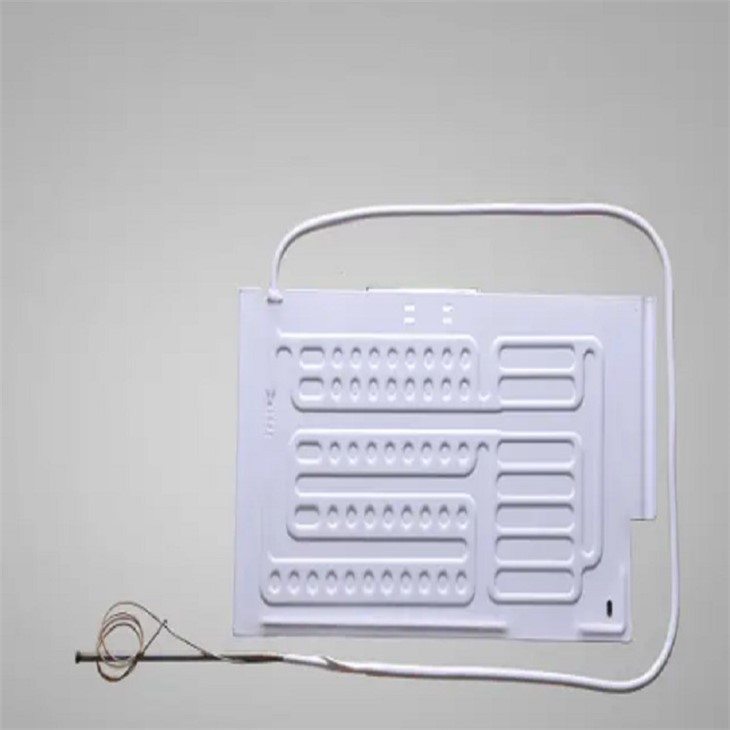
As a supplier of Single System Bonding Evaporators, I am well - versed in the ins and outs of this product. While Single System Bonding Evaporators have their advantages, it is equally important to understand their disadvantages. This knowledge can help potential customers make more informed decisions when considering the purchase of such equipment.
1. Limited Temperature Control
One of the significant drawbacks of a Single System Bonding Evaporator is its limited temperature control capabilities. In a single - system setup, the evaporator is designed to operate based on a single set of parameters. This means that it has a relatively narrow range within which it can maintain temperature.
For example, in a commercial refrigeration application, if a business needs to store different types of products with varying temperature requirements simultaneously, a Single System Bonding Evaporator may not be the best choice. Products like fresh produce may require a temperature range of 2 - 4°C, while frozen goods need to be stored at - 18°C or lower. A single - system evaporator struggles to provide such diverse temperature zones efficiently. It will either over - cool or under - cool certain areas, leading to spoilage of products and potential financial losses for the user.
This limitation also becomes apparent in industrial processes where precise temperature control is crucial. Chemical reactions, for instance, often require specific temperature conditions to proceed correctly. If the evaporator cannot maintain a stable and accurate temperature, the quality and yield of the chemical products may be negatively affected.
2. Higher Risk of System Failure
A Single System Bonding Evaporator has a higher risk of complete system failure compared to multi - system setups. Since it is a single - unit system, any malfunction in a critical component can bring the entire operation to a halt.
Let's say the compressor in the Single System Bonding Evaporator fails. Without a backup system, the cooling process stops immediately. In a food storage facility, this can lead to rapid spoilage of perishable goods. The cost of lost inventory, combined with the expense of repairing the failed component and the downtime of the facility, can be substantial.
Moreover, diagnosing and fixing the problem can be time - consuming. In a multi - system setup, if one system fails, the other systems can continue to operate, providing some level of cooling while the faulty system is being repaired. But in a single - system evaporator, there is no such redundancy, and the entire operation is at the mercy of the single system's reliability.
3. Energy Inefficiency
Single System Bonding Evaporators can be energy - inefficient, especially when the cooling load varies. These evaporators are typically designed to operate at a fixed capacity to meet the maximum expected cooling demand. However, in real - world scenarios, the cooling load often fluctuates.

During periods of low cooling demand, such as at night in a commercial refrigeration store, the evaporator may still be running at full capacity. This leads to excessive energy consumption and higher electricity bills. In contrast, multi - system evaporators can adjust the number of operating systems according to the cooling load. For example, they can shut down some systems during low - demand periods, resulting in significant energy savings.
In addition, the single - system design may not be optimized for different environmental conditions. For example, in hot and humid climates, the evaporator may have to work harder to achieve the desired cooling effect, consuming more energy in the process.
4. Difficulty in Expansion
Expanding the cooling capacity of a Single System Bonding Evaporator can be a challenging and costly process. Unlike multi - system evaporators, which can be easily expanded by adding additional systems, a single - system setup often requires a complete overhaul.
If a business experiences growth and needs to increase its refrigeration capacity, it may find that the existing Single System Bonding Evaporator cannot be simply upgraded. Instead, a new and larger evaporator may need to be installed, which involves significant capital investment, as well as downtime for the business during the installation process.
The bonding process in these evaporators also makes it difficult to modify or add components. The bonded structure is designed to be a unified whole, and any attempt to make changes can compromise the integrity of the evaporator, leading to potential leaks or other performance issues.
5. Maintenance Complexity
Maintaining a Single System Bonding Evaporator can be more complex compared to other types of evaporators. The bonded structure means that accessing internal components for inspection and repair can be challenging.
For example, if there is a leak in the refrigerant lines inside the bonded evaporator, it may be difficult to locate the exact source of the leak. The bonded layers can make it hard to reach the affected area, and disassembly may be required, which is a time - consuming and delicate process.
Moreover, the specialized nature of the bonding materials and techniques used in these evaporators means that maintenance personnel need to have specific training and expertise. This can limit the pool of available technicians and increase the cost of maintenance.
Conclusion
While Single System Bonding Evaporators have their place in certain applications, it is essential for potential customers to be aware of their disadvantages. Limited temperature control, higher risk of system failure, energy inefficiency, difficulty in expansion, and maintenance complexity are all factors that need to be considered.
If you are still interested in exploring Bonded Type Evaporator or Refrigerator Evaporator solutions, despite these drawbacks, we are here to help. Our team of experts can provide in - depth consultations to determine if a Single System Bonding Evaporator is the right choice for your specific needs. We can also offer advice on how to mitigate the potential disadvantages.
If you have any questions or would like to discuss a potential purchase, please do not hesitate to reach out. We look forward to engaging in productive discussions with you to find the best refrigeration solution for your business.
References
- "Principles of Refrigeration", Dossat, R. J.
- "Commercial Refrigeration for Air Conditioning Technicians", Althouse, A. D., Turnquist, C. H., & Bracciano, A. J.