

As a supplier of Refrigerator Evaporator, I've witnessed firsthand the evolution and differences between frost-free and non-frost-free refrigerator evaporators. These components play a crucial role in the cooling process of refrigerators, yet they have distinct features that set them apart.
Basic Working Principles
Let's start with the basic working principles of both types of evaporators. In a refrigerator, the evaporator is responsible for absorbing heat from the inside of the fridge, which causes the refrigerant to evaporate and turn from a liquid to a gas. This phase change is what cools the interior of the refrigerator.
Non-frost-free evaporators, also known as frost-up or manual-defrost evaporators, operate in a relatively straightforward manner. As the refrigerant absorbs heat, moisture in the air inside the fridge condenses on the cold surface of the evaporator and freezes. Over time, a layer of frost builds up on the evaporator. This frost acts as an insulator, reducing the efficiency of heat transfer. As a result, the compressor has to work harder and longer to maintain the desired temperature inside the refrigerator, which can lead to higher energy consumption. To address this issue, users need to manually defrost the refrigerator periodically by turning it off and allowing the frost to melt.
On the other hand, frost-free evaporators are designed to prevent the accumulation of frost. These evaporators are equipped with a heating element and a timer. The heating element is activated at regular intervals, typically every few hours, to melt any frost that has formed on the evaporator. The melted water then drains out of the refrigerator through a drain tube. This automated defrosting process ensures that the evaporator remains free of frost, maintaining efficient heat transfer and consistent cooling performance.
Design and Construction
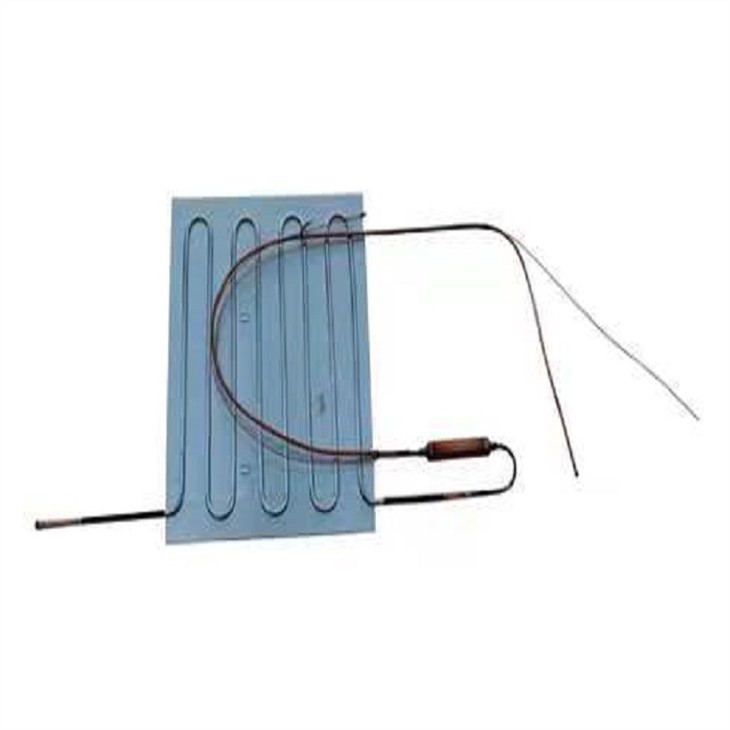
The design and construction of frost-free and non-frost-free evaporators also differ significantly. Non-frost-free evaporators are generally simpler in design. They often consist of a single tube or a series of tubes that are bent into a coil shape. The tubes are usually made of copper or aluminum, which are good conductors of heat. The coil is then mounted inside the refrigerator compartment, typically at the back or bottom.
In contrast, frost-free evaporators are more complex in design. In addition to the refrigerant tubes, they also include a heating element, a temperature sensor, and a defrost timer. The heating element is usually a resistive wire that is wrapped around the evaporator coil. The temperature sensor monitors the temperature of the evaporator, and the defrost timer controls when the heating element is activated. The heating element and the temperature sensor are connected to the refrigerator's control board, which coordinates the defrosting process.
Another difference in design is the placement of the evaporator. In most frost-free refrigerators, the evaporator is located in a separate compartment, known as the evaporator compartment, which is usually at the back of the freezer section. This compartment is insulated from the rest of the refrigerator to prevent heat transfer and to ensure that the defrosting process does not affect the temperature of the food inside the fridge.
Performance and Efficiency
One of the main advantages of frost-free evaporators is their superior performance and efficiency. As mentioned earlier, the absence of frost on the evaporator surface ensures efficient heat transfer, which allows the refrigerator to maintain a more consistent temperature. This is especially important for storing perishable foods, as fluctuations in temperature can cause spoilage.

In terms of energy efficiency, frost-free evaporators are generally more efficient than non-frost-free ones. The automated defrosting process prevents the formation of a thick layer of frost, which can significantly reduce the efficiency of the evaporator. As a result, the compressor does not have to work as hard to maintain the desired temperature, which leads to lower energy consumption. According to some studies, frost-free refrigerators can use up to 20% less energy than non-frost-free refrigerators.
However, it's important to note that the defrosting process in frost-free refrigerators also consumes some energy. The heating element has to be powered on periodically to melt the frost, which adds to the overall energy consumption of the refrigerator. Therefore, the actual energy savings may vary depending on factors such as the frequency of use, the ambient temperature, and the size of the refrigerator.
Maintenance and Durability
Maintenance requirements are another area where frost-free and non-frost-free evaporators differ. Non-frost-free evaporators require regular manual defrosting, which can be a time-consuming and messy task. If the frost is not removed promptly, it can build up to a thick layer, which can damage the evaporator and reduce its efficiency. In addition, the defrosting process may also cause water to leak inside the refrigerator, which can lead to mold and mildew growth.
Frost-free evaporators, on the other hand, require less maintenance. The automated defrosting process takes care of removing the frost, so users do not have to worry about manual defrosting. However, the heating element and the defrost timer in frost-free evaporators are prone to failure over time. If these components malfunction, the defrosting process may not work properly, which can lead to the formation of frost on the evaporator. Therefore, it's important to have the frost-free evaporator inspected and maintained regularly by a qualified technician.
In terms of durability, both types of evaporators can last for many years if they are properly maintained. However, frost-free evaporators are generally more expensive to repair than non-frost-free ones due to their more complex design and the need to replace specialized components such as the heating element and the defrost timer.
Cost and Market Demand
The cost of frost-free and non-frost-free evaporators also varies. Non-frost-free evaporators are generally less expensive to manufacture and purchase than frost-free ones. This is because they have a simpler design and do not require additional components such as a heating element and a defrost timer. As a result, non-frost-free refrigerators are often more affordable than frost-free ones, making them a popular choice for budget-conscious consumers.
However, the market demand for frost-free refrigerators has been increasing in recent years due to their convenience and energy efficiency. Consumers are willing to pay a premium for the hassle-free operation and better performance of frost-free refrigerators. According to market research, the global market for frost-free refrigerators is expected to continue to grow in the coming years, driven by factors such as increasing disposable income, changing consumer lifestyles, and growing awareness of energy efficiency.
Conclusion
In conclusion, frost-free and non-frost-free refrigerator evaporators have distinct differences in terms of working principles, design, performance, maintenance, cost, and market demand. Non-frost-free evaporators are simpler and less expensive, but they require regular manual defrosting and may be less energy-efficient. Frost-free evaporators, on the other hand, are more complex and expensive, but they offer the convenience of automated defrosting and better energy efficiency.
As a supplier of Refrigerator Evaporator, we offer a wide range of both frost-free and non-frost-free evaporators to meet the diverse needs of our customers. Our Bonded Type Evaporator is a popular choice for both types of refrigerators, offering high efficiency, durability, and reliability.
If you are in the market for refrigerator evaporators or have any questions about our products, we encourage you to contact us for further information and to discuss your procurement needs. We look forward to working with you to provide the best solutions for your refrigerator manufacturing or repair requirements.
References
- ASHRAE Handbook - Refrigeration. American Society of Heating, Refrigerating and Air-Conditioning Engineers.
- Refrigeration and Air Conditioning Technology. William C. Whitman, William M. Johnson, and John A. Tomczyk.