

As a supplier of Refrigerator Evaporator, I've had the privilege of witnessing firsthand the remarkable engineering behind these crucial components. Refrigerator evaporators play a pivotal role in the cooling process, and their ability to adapt to different ambient temperatures is nothing short of fascinating. In this blog post, I'll delve into the intricacies of how refrigerator evaporators adjust to varying environmental conditions, shedding light on the science and technology that make it all possible.
The Basics of a Refrigerator Evaporator
Before we explore how a refrigerator evaporator adjusts to different ambient temperatures, let's first understand its fundamental function. The evaporator is a key component in the refrigeration cycle, responsible for absorbing heat from the refrigerator's interior and transferring it to the refrigerant. This process causes the refrigerant to change from a liquid to a vapor, effectively cooling the air inside the fridge.
The evaporator typically consists of a series of coils or tubes through which the refrigerant flows. As the warm air from the refrigerator's interior passes over these coils, the heat is transferred to the refrigerant, causing it to evaporate. This phase change absorbs a significant amount of heat energy, resulting in a drop in temperature inside the fridge.
The Impact of Ambient Temperature on Evaporator Performance
Ambient temperature refers to the temperature of the surrounding environment where the refrigerator is located. It can have a profound impact on the performance of the evaporator and, consequently, the overall cooling efficiency of the refrigerator.
High Ambient Temperatures
When the ambient temperature is high, the evaporator faces several challenges. Firstly, the warm air outside the refrigerator contains more heat energy, which means there is a greater temperature difference between the inside and outside of the fridge. This increased temperature gradient makes it more difficult for the evaporator to absorb heat from the interior, as the refrigerant has to work harder to transfer the heat to the warmer outside environment.
Secondly, high ambient temperatures can cause the refrigerant to vaporize more quickly, reducing its ability to absorb heat effectively. This can lead to a decrease in cooling capacity and an increase in energy consumption as the compressor has to work harder to maintain the desired temperature inside the fridge.
Low Ambient Temperatures
On the other hand, low ambient temperatures can also pose challenges for the evaporator. When the outside temperature is cold, the refrigerant may not vaporize as easily, resulting in a reduced cooling effect. Additionally, the cold air can cause the moisture in the air to condense on the evaporator coils, leading to the formation of ice. This ice buildup can insulate the coils, reducing their ability to transfer heat and further compromising the cooling efficiency of the refrigerator.
How Refrigerator Evaporators Adjust to Different Ambient Temperatures
To overcome the challenges posed by different ambient temperatures, refrigerator evaporators are equipped with various mechanisms and technologies that allow them to adjust their performance accordingly.
Thermostatic Expansion Valve (TXV)
One of the most common methods used to regulate the flow of refrigerant in the evaporator is the thermostatic expansion valve (TXV). The TXV is a device that controls the amount of refrigerant entering the evaporator based on the temperature and pressure conditions.
In high ambient temperatures, the TXV adjusts the flow of refrigerant to ensure that the evaporator receives an adequate supply of refrigerant to maintain the desired cooling capacity. By increasing the refrigerant flow, the TXV helps to compensate for the increased heat load and ensures that the evaporator can effectively absorb heat from the interior of the fridge.
Conversely, in low ambient temperatures, the TXV reduces the refrigerant flow to prevent overcooling and ice buildup on the evaporator coils. By regulating the refrigerant flow, the TXV helps to optimize the performance of the evaporator and maintain the efficiency of the refrigeration system.
Defrosting Systems
To address the issue of ice buildup on the evaporator coils in low ambient temperatures, most refrigerators are equipped with defrosting systems. These systems are designed to periodically melt the ice that accumulates on the coils, ensuring that the evaporator can continue to function effectively.
There are several types of defrosting systems, including manual defrost, automatic defrost, and frost-free systems. Manual defrost systems require the user to manually turn off the refrigerator and allow the ice to melt naturally. Automatic defrost systems use a timer to periodically turn on a heating element that melts the ice on the evaporator coils. Frost-free systems, on the other hand, use a combination of heating elements and fans to continuously circulate warm air over the evaporator coils, preventing ice from forming in the first place.
Variable Speed Compressors
Another technology that helps refrigerator evaporators adjust to different ambient temperatures is the use of variable speed compressors. Unlike traditional compressors that operate at a fixed speed, variable speed compressors can adjust their speed based on the cooling demand.
In high ambient temperatures, the compressor can increase its speed to provide more cooling capacity, ensuring that the evaporator can effectively absorb heat from the interior of the fridge. Conversely, in low ambient temperatures, the compressor can reduce its speed to conserve energy and prevent overcooling.
By adjusting the compressor speed, variable speed compressors help to optimize the performance of the evaporator and improve the overall energy efficiency of the refrigerator.
Advanced Control Systems
Modern refrigerators are also equipped with advanced control systems that use sensors to monitor the ambient temperature and adjust the operation of the evaporator accordingly. These control systems can automatically adjust the refrigerant flow, compressor speed, and defrosting cycle based on the environmental conditions, ensuring that the refrigerator operates at peak efficiency at all times.
For example, if the ambient temperature rises, the control system can increase the refrigerant flow and compressor speed to compensate for the increased heat load. Similarly, if the ambient temperature drops, the control system can reduce the refrigerant flow and adjust the defrosting cycle to prevent ice buildup on the evaporator coils.

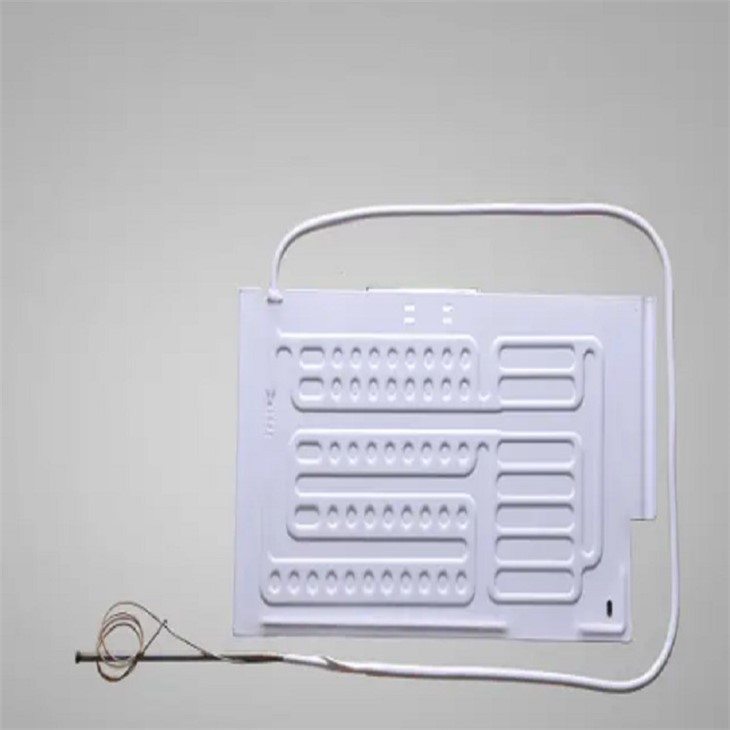
The Role of Bonded Type Evaporator in Temperature Adaptation
As a supplier of Bonded Type Evaporator, I'm particularly proud of the unique features and benefits that this type of evaporator offers in terms of temperature adaptation.
Bonded type evaporators are designed with a special bonding process that ensures a tight and uniform contact between the refrigerant tubes and the fins. This design allows for efficient heat transfer, even in challenging ambient conditions.
The bonded construction of the evaporator helps to improve its structural integrity and resistance to vibration and thermal stress, making it more reliable and durable. Additionally, the uniform contact between the tubes and fins ensures that the refrigerant can flow smoothly through the evaporator, maximizing its cooling efficiency.
In high ambient temperatures, the bonded type evaporator's efficient heat transfer design allows it to effectively absorb heat from the interior of the fridge, even when the outside temperature is high. The tight contact between the tubes and fins helps to minimize the thermal resistance, ensuring that the refrigerant can transfer heat quickly and efficiently.
In low ambient temperatures, the bonded type evaporator's robust construction helps to prevent ice buildup on the coils. The uniform contact between the tubes and fins ensures that the heat is distributed evenly, reducing the likelihood of ice formation. Additionally, the bonded type evaporator can be equipped with advanced defrosting systems to further prevent ice buildup and maintain optimal performance.
Conclusion
In conclusion, the ability of a refrigerator evaporator to adjust to different ambient temperatures is crucial for maintaining the cooling efficiency and performance of the refrigerator. Through the use of advanced technologies such as thermostatic expansion valves, defrosting systems, variable speed compressors, and advanced control systems, refrigerator evaporators can effectively adapt to varying environmental conditions and ensure optimal cooling performance.
As a supplier of Refrigerator Evaporator and Bonded Type Evaporator, I'm committed to providing high-quality products that are designed to meet the diverse needs of our customers. Our evaporators are engineered with the latest technologies and materials to ensure efficient heat transfer, reliable performance, and long-lasting durability.
If you're in the market for a refrigerator evaporator or have any questions about our products, I encourage you to contact us for a consultation. Our team of experts is here to help you find the right solution for your specific requirements and ensure that you get the best possible performance from your refrigerator.
References
- ASHRAE Handbook - Refrigeration. American Society of Heating, Refrigerating and Air-Conditioning Engineers.
- Dossat, R. J. (1997). Principles of Refrigeration. Prentice Hall.
- Stoecker, W. F., & Jones, J. W. (1982). Refrigeration and Air Conditioning. McGraw-Hill.