

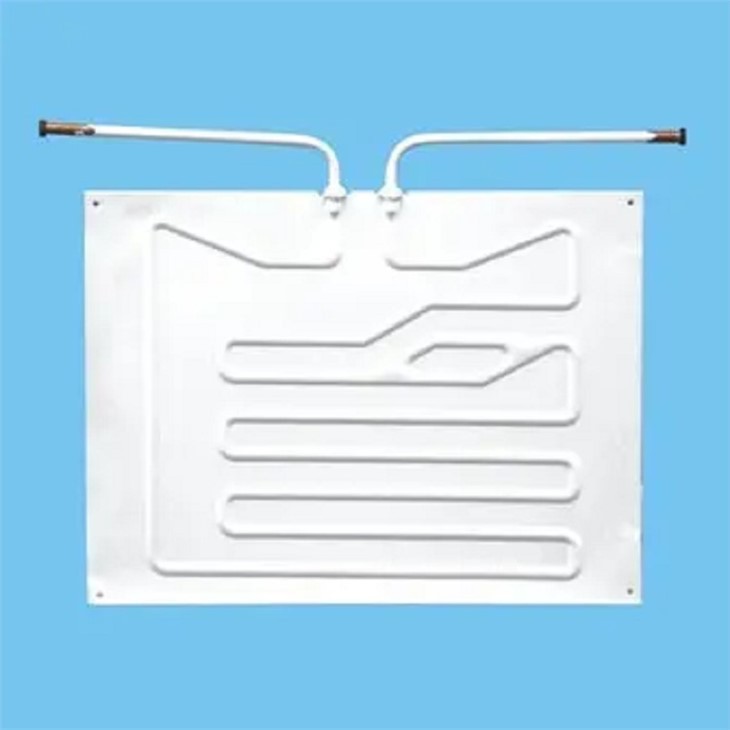
As a supplier of Single System Bonding Evaporators, I am frequently asked about the control systems used in these essential components. In this blog post, I will delve into the various control systems employed in Single System Bonding Evaporators, explaining their functions, importance, and how they contribute to the overall efficiency and performance of the evaporator.
Temperature Control Systems
One of the primary control systems in a Single System Bonding Evaporator is the temperature control system. Maintaining the correct temperature is crucial for the proper functioning of the evaporator and the refrigeration system as a whole. There are several types of temperature control systems commonly used:
Thermostats
Thermostats are the most basic form of temperature control. They work by sensing the temperature of the evaporator and turning the refrigeration system on or off accordingly. A simple mechanical thermostat consists of a bimetallic strip that bends as it heats or cools, activating a switch to control the compressor. Electronic thermostats, on the other hand, use sensors to measure the temperature and send a signal to a control board, which then regulates the compressor operation.
Thermostats are set to a specific temperature range, and when the temperature inside the evaporator rises above the set point, the compressor is turned on to cool the evaporator. Once the temperature drops below the set point, the compressor is turned off. This on-off cycling helps to maintain a relatively constant temperature inside the evaporator.
Proportional - Integral - Derivative (PID) Controllers
PID controllers are more advanced temperature control systems. They continuously monitor the temperature of the evaporator and adjust the compressor speed or the flow of refrigerant to maintain the desired temperature. The PID controller uses three control parameters: proportional, integral, and derivative.
The proportional control adjusts the output of the controller based on the current error between the set point temperature and the actual temperature. The integral control takes into account the cumulative error over time, helping to eliminate any steady - state errors. The derivative control predicts the future behavior of the temperature based on its rate of change, allowing the controller to respond quickly to changes in the system.
PID controllers offer more precise temperature control compared to thermostats, reducing temperature fluctuations and improving the overall efficiency of the evaporator. They are commonly used in applications where tight temperature control is required, such as in commercial refrigerators and freezers.
Pressure Control Systems
Pressure control systems are also vital in a Single System Bonding Evaporator. The pressure in the evaporator is related to the temperature and the state of the refrigerant. Maintaining the correct pressure is essential for the proper operation of the refrigeration cycle.
High - Pressure and Low - Pressure Switches
High - pressure and low - pressure switches are used to protect the refrigeration system from operating outside of safe pressure limits. The high - pressure switch is set to a maximum pressure value. If the pressure in the system exceeds this value, the switch will open, shutting off the compressor to prevent damage.
The low - pressure switch, on the other hand, is set to a minimum pressure value. If the pressure in the evaporator drops below this value, it may indicate a problem such as a refrigerant leak or a blockage in the system. The low - pressure switch will then open, shutting off the compressor to prevent further damage.
Pressure Regulators
Pressure regulators are used to control the pressure of the refrigerant flowing into the evaporator. They work by adjusting the flow rate of the refrigerant based on the pressure in the evaporator. A pressure regulator maintains a constant pressure at the inlet of the evaporator, ensuring that the refrigerant evaporates at the correct rate.
Flow Control Systems
Flow control systems are responsible for regulating the flow of refrigerant through the Single System Bonding Evaporator. Proper refrigerant flow is essential for efficient heat transfer and the overall performance of the evaporator.
Capillary Tubes
Capillary tubes are a simple and commonly used flow control device in small refrigeration systems. They are small - diameter tubes that restrict the flow of refrigerant, creating a pressure drop between the condenser and the evaporator. The length and diameter of the capillary tube determine the flow rate of the refrigerant.
Capillary tubes are inexpensive and reliable, but they have a fixed flow rate. They are suitable for applications where the load on the evaporator is relatively constant.
Expansion Valves
Expansion valves are more advanced flow control devices. They can adjust the flow rate of the refrigerant based on the operating conditions of the evaporator. There are two main types of expansion valves: thermostatic expansion valves (TXV) and electronic expansion valves (EEV).
Thermostatic expansion valves use a sensing bulb filled with a refrigerant to sense the temperature at the outlet of the evaporator. Based on this temperature, the valve adjusts the flow of refrigerant to maintain a constant superheat at the outlet of the evaporator. Superheat is the difference between the actual temperature of the refrigerant vapor and its saturation temperature at the given pressure.
Electronic expansion valves, on the other hand, use electronic sensors and a control board to adjust the flow of refrigerant. They offer more precise control compared to TXV and can respond more quickly to changes in the operating conditions. EEVs are commonly used in larger and more complex refrigeration systems.
Importance of Control Systems in a Single System Bonding Evaporator
The control systems in a Single System Bonding Evaporator play a crucial role in ensuring its efficient and reliable operation. Here are some of the key benefits:
- Energy Efficiency: Precise temperature, pressure, and flow control systems help to optimize the operation of the evaporator, reducing energy consumption. For example, a PID temperature controller can adjust the compressor speed based on the actual load, preventing the compressor from running at full capacity when it is not necessary.
- Product Quality: In applications such as food storage and refrigeration, maintaining the correct temperature and pressure is essential for preserving the quality and safety of the products. Accurate control systems help to ensure that the evaporator operates within the required parameters, keeping the products fresh and safe.
- System Protection: Pressure switches and other control devices protect the refrigeration system from damage due to over - pressure or under - pressure conditions. They also help to detect and prevent problems such as refrigerant leaks, which can lead to system failure if not addressed promptly.
Applications and Further Reading
Single System Bonding Evaporators with these advanced control systems find applications in various industries, including commercial refrigeration, air conditioning, and industrial cooling. If you want to learn more about our products, you can visit our websites: Bonded Type Evaporator and Refrigerator Evaporator.
If you are in the market for a high - quality Single System Bonding Evaporator, we invite you to contact us for a detailed discussion about your specific requirements. Our team of experts is ready to assist you in selecting the right evaporator with the most suitable control systems for your application.
References
- ASHRAE Handbook of Refrigeration. American Society of Heating, Refrigerating and Air - Conditioning Engineers.
- Stoecker, W. F. Refrigeration and Air Conditioning. McGraw - Hill.