

What is the magnetic properties of Rust Resistant Film?
As a supplier of Rust Resistant Film, I've been deeply involved in understanding and exploring the various properties of this remarkable product. Rust Resistant Film is a specialized material designed to protect surfaces from the detrimental effects of rust and corrosion. In this blog, I'll delve into one of its less - explored aspects: magnetic properties.
Understanding Rust Resistant Film
Rust Resistant Film is a type of Rust Resistant Film that provides a protective barrier against moisture, oxygen, and other corrosive agents. It is widely used in industries such as automotive, marine, and construction to extend the lifespan of metal components. The film can be applied to a variety of surfaces, including steel, iron, and aluminum, through methods like spraying, dipping, or laminating.
Magnetic Properties: An Overview
Magnetism is a fundamental physical property associated with certain materials. When it comes to Rust Resistant Film, its magnetic properties can vary depending on several factors, including its composition and the manufacturing process.
Composition and Magnetism
The magnetic behavior of Rust Resistant Film is primarily influenced by the presence of magnetic particles in its formulation. Some Rust Resistant Films are engineered to contain ferromagnetic materials such as iron, nickel, or cobalt. These materials have unpaired electrons, which align in the presence of a magnetic field, creating a magnetic moment.
For example, if a Rust Resistant Film contains iron nanoparticles, these particles can respond to an external magnetic field. The alignment of the magnetic moments of these particles gives the film magnetic properties. This can be useful in applications where the film needs to be held in place magnetically or where it needs to interact with magnetic sensors.
Manufacturing Process and Magnetism
The manufacturing process also plays a crucial role in determining the magnetic properties of Rust Resistant Film. During the production, the way the magnetic particles are dispersed within the film matrix can affect the overall magnetic behavior.
If the magnetic particles are uniformly distributed throughout the film, the film is likely to exhibit more consistent magnetic properties. On the other hand, if the particles are clustered or unevenly distributed, the magnetic field strength and direction may vary across the film. Additionally, the curing process of the film can also impact magnetism. High - temperature curing may cause changes in the crystal structure of the magnetic particles, altering their magnetic properties.
Applications of Magnetic Rust Resistant Film
The magnetic properties of Rust Resistant Film open up a wide range of applications in different industries.
Automotive Industry
In the automotive industry, magnetic Rust Resistant Film can be used to protect critical components such as engine parts and chassis. The film can be magnetically attached to these components, providing a secure and reliable protective layer. This is particularly useful in areas where traditional fastening methods may not be practical or where a quick and easy installation is required.
Moreover, the magnetic properties of the film can be utilized in automotive sensors. For example, the film can be used as a sensing element in magnetic sensors that detect the position or movement of engine components. The interaction between the magnetic field of the film and the sensor can generate an electrical signal, which can be used for various control and monitoring purposes.
Electronics Industry
In the electronics industry, Electric Conductive Film is often used in combination with Rust Resistant Film. The magnetic properties of the Rust Resistant Film can be exploited to improve the performance of electronic devices. For instance, the film can be used to shield electronic components from electromagnetic interference (EMI). The magnetic field of the film can redirect the electromagnetic waves, protecting the sensitive electronic circuits inside the device.
Construction Industry
In construction, magnetic Rust Resistant Film can be applied to metal structures such as bridges and buildings. The film can be magnetically adhered to the metal surfaces, providing corrosion protection. This is especially beneficial in areas with high humidity or harsh environmental conditions. Additionally, the magnetic properties of the film can be used in construction sensors to monitor the structural integrity of the building. For example, changes in the magnetic field of the film can indicate the presence of cracks or deformations in the metal structure.
Measuring the Magnetic Properties of Rust Resistant Film
To accurately assess the magnetic properties of Rust Resistant Film, several measurement techniques can be employed.
Magnetometry
Magnetometry is a common method used to measure the magnetic properties of materials. In this technique, a sample of the Rust Resistant Film is placed in a magnetic field, and the magnetization of the sample is measured as a function of the applied magnetic field. The resulting magnetization curve provides information about the magnetic properties of the film, such as its saturation magnetization, coercivity, and remanence.
Magnetic Force Microscopy (MFM)
Magnetic Force Microscopy is a high - resolution imaging technique that can be used to visualize the magnetic domains within the Rust Resistant Film. MFM uses a sharp magnetic tip to scan the surface of the film, and the interaction between the tip and the magnetic field of the film is measured. This allows for the mapping of the magnetic domain structure of the film, providing insights into its magnetic behavior at the nanoscale.
Comparison with Other Functional Films
When compared to other functional films such as Flame Retardant Coating, Rust Resistant Film with magnetic properties offers unique advantages.
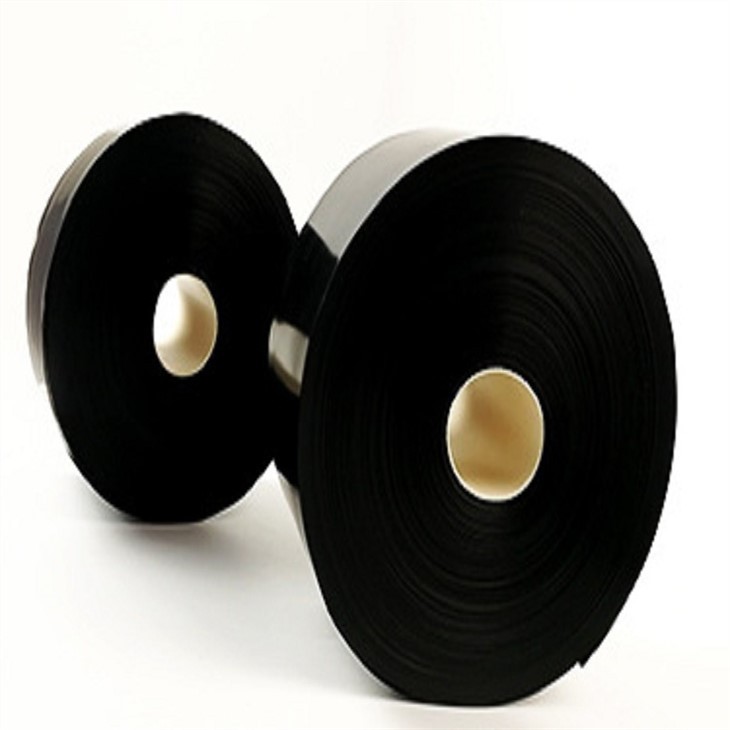

Flame Retardant Coating is primarily designed to prevent the spread of fire, while Rust Resistant Film focuses on corrosion protection. However, the magnetic properties of Rust Resistant Film make it suitable for applications where magnetic interaction is required. For example, in some industrial processes, the magnetic Rust Resistant Film can be used to hold components in place during assembly, which is not a feature typically associated with Flame Retardant Coating.
Future Developments
The field of Rust Resistant Film with magnetic properties is constantly evolving. Future research may focus on developing films with enhanced magnetic properties, such as higher saturation magnetization and lower coercivity. Additionally, efforts may be made to improve the compatibility of the film with different substrates and to reduce its environmental impact.
Contact for Procurement
If you are interested in learning more about our Rust Resistant Film and its magnetic properties, or if you are considering a procurement, we invite you to get in touch with us. Our team of experts is ready to answer your questions and provide you with detailed information about our products.
References
- Cullity, B. D., & Graham, C. D. (2008). Introduction to Magnetic Materials. Wiley - Interscience.
- O'Handley, R. C. (2000). Modern Magnetic Materials: Principles and Applications. Wiley.
- Bozorth, R. M. (1951). Ferromagnetism. Van Nostrand.