

As a supplier of Single System Bonding Evaporators, I'm often asked about the role of the condenser in this specific setup. In this blog post, I'll delve into the crucial function of the condenser within a Single System Bonding Evaporator and why it's an integral part of the overall refrigeration process.
Understanding the Single System Bonding Evaporator
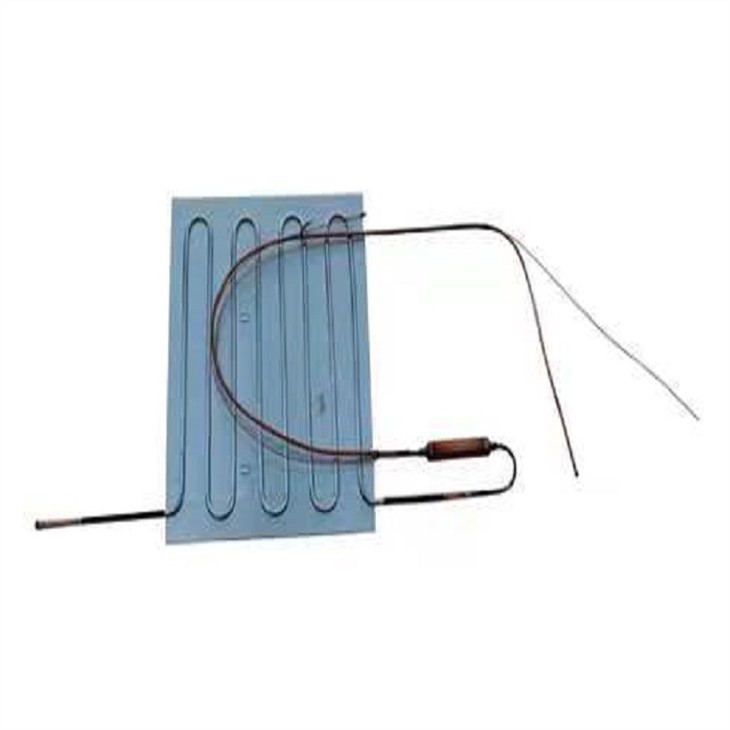
Before we discuss the condenser's role, let's briefly understand what a Single System Bonding Evaporator is. A Single System Bonding Evaporator is a key component in refrigeration systems, commonly used in various applications such as Refrigerator Evaporators. It operates on the principle of heat exchange, where it absorbs heat from the surrounding environment, causing the refrigerant inside to evaporate and turn from a liquid to a vapor state. This evaporation process is what cools the area or the substance being refrigerated.
The Condenser: A Vital Component
The condenser is an equally important part of the refrigeration cycle in a Single System Bonding Evaporator. Its primary role is to release the heat that the evaporator has absorbed. Once the refrigerant has evaporated in the evaporator and turned into a high - pressure vapor, it flows into the condenser.
Heat Dissipation
The condenser works by dissipating the heat that the refrigerant has picked up from the evaporator. As the high - pressure refrigerant vapor enters the condenser, it comes into contact with a series of coils or fins. These coils are designed to increase the surface area available for heat transfer. The refrigerant then releases its heat to the surrounding air or a cooling medium (such as water in some industrial applications). As the heat is removed, the refrigerant begins to condense back into a liquid state.

Pressure Regulation
Another significant role of the condenser is to regulate the pressure within the refrigeration system. When the refrigerant vapor condenses back into a liquid, its volume decreases significantly. This reduction in volume helps to lower the pressure in the system. Maintaining the correct pressure is crucial for the efficient operation of the Single System Bonding Evaporator. If the pressure is too high, it can put excessive strain on the compressor and other components, leading to premature wear and potential system failures. On the other hand, if the pressure is too low, the refrigeration process may not work effectively, resulting in poor cooling performance.
Liquid Refrigerant Supply
Once the refrigerant has fully condensed into a liquid in the condenser, it is ready to be sent back to the evaporator to repeat the cycle. The condenser ensures a continuous supply of liquid refrigerant to the evaporator. This liquid refrigerant is essential for the evaporator to carry out its heat - absorbing function. Without a proper supply of liquid refrigerant, the evaporator would not be able to cool the desired area or substance effectively.
Types of Condensers in Single System Bonding Evaporators
There are several types of condensers that can be used in conjunction with Single System Bonding Evaporators, each with its own advantages and applications.
Air - Cooled Condensers
Air - cooled condensers are the most common type used in residential and small - commercial refrigeration systems. They work by using a fan to blow air over the condenser coils, facilitating heat transfer from the refrigerant to the air. These condensers are relatively simple in design and easy to install. They are also cost - effective, making them a popular choice for many applications. However, their efficiency can be affected by high ambient temperatures, as the ability to dissipate heat decreases when the surrounding air is already warm.
Water - Cooled Condensers
Water - cooled condensers are often used in larger industrial refrigeration systems. They use water as the cooling medium to remove heat from the refrigerant. Water has a higher heat - carrying capacity than air, which means that water - cooled condensers can be more efficient at dissipating heat, especially in high - heat applications. However, they require a constant supply of water, which can be a limitation in areas where water is scarce. Additionally, they are more complex to install and maintain compared to air - cooled condensers.
Evaporative Condensers
Evaporative condensers combine the principles of air - cooled and water - cooled condensers. They use a combination of air and water evaporation to cool the refrigerant. As the hot refrigerant vapor enters the condenser, water is sprayed over the condenser coils. The air is then drawn through the coils, causing the water to evaporate. The evaporation process absorbs heat from the refrigerant, facilitating its condensation. Evaporative condensers are highly efficient, especially in hot and dry climates. However, they require regular maintenance to prevent the growth of algae and other contaminants in the water system.
Impact on Overall System Performance
The performance of the condenser has a direct impact on the overall efficiency and effectiveness of the Single System Bonding Evaporator. A well - functioning condenser ensures that the refrigeration cycle operates smoothly, with optimal heat transfer and pressure regulation.
Energy Efficiency
An efficient condenser can significantly improve the energy efficiency of the refrigeration system. When the condenser is able to dissipate heat effectively, the compressor does not have to work as hard to maintain the correct pressure in the system. This results in lower energy consumption and reduced operating costs. For example, in a Bonded Type Evaporator used in a commercial refrigerator, an energy - efficient condenser can lead to substantial savings on electricity bills over time.
Cooling Capacity
The condenser also affects the cooling capacity of the Single System Bonding Evaporator. If the condenser is not able to condense the refrigerant properly, there will be a reduced supply of liquid refrigerant to the evaporator. This can lead to a decrease in the evaporator's ability to absorb heat, resulting in poor cooling performance. On the other hand, a high - performance condenser ensures that there is an adequate supply of liquid refrigerant, allowing the evaporator to cool the desired area or substance effectively.
Conclusion
In conclusion, the condenser plays a vital role in a Single System Bonding Evaporator. It is responsible for heat dissipation, pressure regulation, and providing a continuous supply of liquid refrigerant to the evaporator. The type of condenser used can have a significant impact on the system's efficiency, performance, and operating costs.
As a supplier of Single System Bonding Evaporators, we understand the importance of a well - designed and high - performance condenser in the overall refrigeration system. We offer a range of evaporators and condensers that are designed to work together seamlessly to provide optimal cooling solutions for various applications.
If you are in the market for a Single System Bonding Evaporator or have any questions about the role of the condenser in your refrigeration system, I encourage you to contact us for a detailed discussion. Our team of experts is ready to assist you in finding the best solution for your specific needs.
References
ASHRAE Handbook of Refrigeration. American Society of Heating, Refrigerating and Air - Conditioning Engineers.
Refrigeration and Air Conditioning Technology. William C. Whitman, William M. Johnson, John Tomczyk, Eugene Silberstein.